 Written by Mike Pettigrew, VMAC Marketing Manager
For anyone managing service trucks or spec’ing upfits, the past year may have felt like driving a truck through fog. Freight volumes fluctuated and OEM lead times stretched. Upfitters scrambled for parts, while fleets deferred much needed replacements, amidst economic uncertainty, tariffs, and unresolved supply chain challenges.
North America’s trucking and service-fleet markets are showing some early signs of optimism – but not a boom or dramatic surge. Instead, there has been a steady, measurable shift from contraction to correction, and now toward a period of balanced stability as the industry is resetting.
 Across the market, analysts, carriers, and logistics leaders are starting to say the same thing: conditions are stabilizing, capacity is tightening, and opportunity is returning.
Examples include:
“Capacity is tightening; rates are showing early signs of recovery in what we hope to be the first leg of an upward cycle.”
FreightPulse, October 27, 2025
Source: https://freightpulse.us/market-signals-show-early-signs-of-a-shift-upward
“The truckload market remains stable broadly...”
C.H. Robinson Worldwide, October 2, 2025
Source: https://www.chrobinson.com/en-us/resources/insights-and-advisories/north-america-freight-insights/oct-2025-freight-market-update
“The U.S. trucking industry has moved beyond the sharp contraction phase of 2023 and into an extended correction cycle.”
ACT Research, October 23, 2025
Source: https://www.actresearch.net/resources/blog/trucking-industry-forecast-2025
These are not headlines designed to grab attention - they are assessments indicating a healthier year ahead. In fact, industry analyst, Craig Fuller, suggests that the industry may be turning upwards, even with continued challenges. Fuller notes that, “there are strong reasons for optimism”, in a recent freightpulse.us article.
This makes 2026 a year for people to shift from a reactive “hold in place” mindset towards strategic planning and smarter equipment decisions.
Stability Is Finally Replacing Volatility
 After years of unpredictable peaks and valleys since Covid, the market is showing early signs of normalizing. C.H. Robinson, a global leader in Lean AI supply chains, noted that the truckload market is “stable broadly,” which is perhaps the most encouraging phrase fleet managers could hope to hear. Stability means planning is possible again.
Arrive Logistics adds, “Q4 market conditions will likely be defined by stable demand and balanced to slightly contracting supply.” Service fleet managers depend on predictability. Whether you are dispatching mobile mechanics, supporting utility crews, or running mining service trucks, stability in transportation and manufacturing ripples directly into your availability of trucks, parts, equipment, and labor.
Capacity Tightening Signals A Turning Point
One of the clearest signals heading into 2026 is capacity tightening. FreightPulse is already reporting reduced capacity across several regions, while BM2 Freight recently noted that we should “expect modest Q4 uplift in import-driven lanes, but broader recovery still fragmented.” Fragmented or not, recovery is recovery, and this shift is opening the door for stronger players to gain ground.
As weaker carriers bow out and freight demand stabilizes, service operations become even more critical. That’s where equipment manufacturers like VMAC come into play. When fleets need reliable air power for roadside repairs, maintenance, or upfits that keep trucks moving, VMAC’s compressor and multi-power systems help service trucks stay ready. A tightening market rewards the companies that show up prepared — and the fleets backed by dependable tools are the ones that rise with the recovery.
Tariffs, Regulations, and Costs Are Reinforcing the Need for Better Uptime
 “Tariff driven cost pressures continue to weigh on margins, keeping the pace of rebalancing slow and uneven,” according to ACT Research. This reinforces a straightforward reality for service truck fleets: downtime is more expensive now than ever.
Which is why service quality and equipment reliability are emerging as priorities across the industry. Service is no longer an afterthought; it’s the glue holding this industry together.
Service Fleets Will Use 2026 to Get Ahead
Fleet managers are not waiting for a full market rebound to start upgrading equipment and resetting replacement cycles. Instead, many are predicting more stability in 2026, to prepare for the next growth phase.
This shift reinforces that service reliability is key. While market fluctuations, rising costs, and industry disruptions can strain operations, resilient businesses know that exceptional service builds loyalty, protects market share, and differentiates them from competitors. By focusing on responsiveness, reliability, and added value, companies like VMAC are showing customers that they can count on them to deliver and come out stronger when conditions improve.
That sentiment aligns perfectly with what fleet analysts are seeing in a lead up to the new year.
Replacement Cycles Are Quietly Waking Up
2025 saw a litany of deferrals and equipment cannibalization, so fleets in 2026 will need to start replacing aging units. Lead times for chassis, upfit components, and work truck accessories like mobile air compressors and multifunction power systems by VMAC are stabilizing, making planning possible again.
As KCH Transportation reported in October, “The wild swings of early 2025 have given way to differentiated regional conditions and a policy environment that improves domestic production outlook.”
Improved domestic production means fewer surprises and more predictable availability of truck chassis and upfit components.
Fleets Are Emphasizing Total Cost of Ownership
 Fuel costs, technician shortages, and parts inflation have pushed fleets to reassess the lifetime costs of their service vehicles. Weight, fuel use, ease of maintenance, and operator productivity are now dominating purchase conversations.
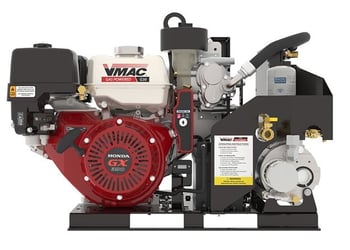
Lower upfront cost options like VMAC’s G30, gas-driven air compressor, will be a popular choice for fleet managers and owners who need the lightweight, compact performance of a rotary screw air compressor at the lowest price possible.
Preventive Maintenance and Telematics Adoption Are Rising
When the market slows, the smartest people invest in readiness. Many are adopting preventive maintenance strategies driven by telematics and real time data. VMAC offers advanced digital controls and optional telematics (on many systems) to provide real time diagnostics, system use, hours, service intervals, remote stop/start, and error codes. This helps operators avoid costly downtime with predictive maintenance, improved safety, and enhanced efficiency.
In 2026, fleets will focus on increasingly synchronizing their upfit decisions with data insights: air compressor run hours, duty cycle time, product warranties, generator cycles, idling behavior, technician time on task, and overall truck utilization.
The result is a stronger business case for more integrated, maintenance-friendly upfit solutions.
Service Quality Is Becoming a Competitive Advantage
VMAC highlighted service becoming a competitive advantage in a recent industry article. “Prioritizing service means addressing challenges before they affect customers. It is a proactive mindset built into every part of our business,” according to Mike Pettigrew, VMAC Marketing Manager.
Fleets are done with uncertainty. They want partners who build, engineer, and support their systems with solid customer service. Gino Fontana, from FleetOwner.com, reports that “the economic uncertainty makes it crucial for fleets to listen, empathize, and adapt services to meet changing customer needs.”
By focusing on responsiveness, reliability, and added value, companies can show customers that they can count on them to deliver, not just to survive, but to come out stronger when conditions improve.
What Fleet Managers Want in 2026
Fleet managers want equipment providers who deliver faster support (because time is money), better product education, reliable parts availability, clear install documentation, and predictable delivery schedules.
Fleet managers will be asking:
- How can we reduce vehicle weight
- How can we reduce idling
- How can we increase productivity per truck
- How can we minimize maintenance load
- How can we reduce failure points
Innovations Helping Fleet Managers Succeed in 2026
When operating costs rise, the trucks that stay running become strategic assets. An air compressor failure or service truck breakdown is no longer an inconvenience. It is a preventable financial hit. According to Work Truck Online, “from EVs to policy changes, the 2026 fleet remarketing outlook is all about people, progress, and finding opportunity in stability.”
VMAC operates within the trucking ecosystem, with industry leading mobile air compressors and multi-power systems for service trucks, mobile tire units, roadside repair vehicles, and more.
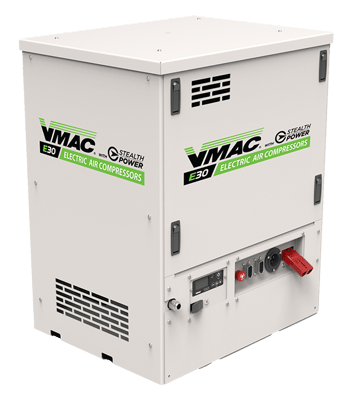 For the service truck industry, vehicle integrated air compressor systems and multifunction power systems will need to meet the growing demands of fleet managers. Companies like VMAC are designing new products designed to deliver even greater integration, power, and performance for utility, construction, and service fleets. VMAC has created the e30 with Stealth Power, the world’s most compact, lightweight, and intelligent battery powered 30 CFM rotary screw air compressor.
According to accio.com, “the compressed air industry is undergoing significant transformation, driven by technological advancements and a growing emphasis on sustainability. These trends are reshaping product development and consumer expectations.”
In the 2025 State of the Mobile Compressed Air Industry Report (SOTI) released in July 2025, it found that air compressors remain the most critical equipment onboard, with 32% of respondents identifying them as the single most important component on their service vehicle.
How Service Fleets Should Act Now to Stay Ahead
Fleet managers planning their 2026 upfit and replacement strategy should audit their fleet’s actual performance. This can be done by measuring average uptime, breakdown frequency, air compressor engine hours, maintenance costs, fuel use related to truck idling, and technician productivity.
Data tells the truth about what needs upgrading. It is also critical to update your spec standards and identify required CFM and psi, weight limits, space constraints, auxiliary power needs such as air compressors or multifunction power systems, and integration with telematics platforms.
Looking Ahead: The Next 18 Months
If the freight market continues to stabilize and capacity tightens further, fleets that upgrade early in 2026 will experience the strongest competitive gains. As Work Truck Online reports in a recent article from November 6, 2025, that the “volatility that defined the past few years has given way to cautious optimism.”
Analysts expect:
- Steady but slower freight recovery
- Higher service truck demand
- Continued push toward electrification
- Stricter regulations
- Increased reliance on telematics
- Greater emphasis on low maintenance equipment
2026 may not be the year of explosive industry growth, but it is absolutely the year of strategic advantage for service truck fleets. The signs of recovery are emerging, and some sense of balance is returning. The companies preparing now will be the ones leading when demand accelerates.
“Even with the ever-changing tariff landscape, unemployment increases, and other concerning economic conditions, the indicators linked to freight are holding up”, according to Axle Logistics in an article dated October 10, 2025.
Service fleets have navigated volatility long enough. Now is the time to steady operations, strengthen equipment decisions, and position for the next cycle in 2026.