Before sunrise, service trucks are already rolling out of the yard with tools loaded and the jobs changing in real time. Electrification is part of the conversation, but potential downtime still drives every decision fleet managers make. Across North America, fleet managers are shifting from asking if electric vehicles will work to asking where they could work without compromising the job.
From Headlines to Hard Questions
Trade coverage through 2025 marked a turning point. Electrification did not stall. It matured. Fleet managers shifted from early experimentation toward selective adoption tied to measurable outcomes. Charging access, technician training, and energy management became as important as vehicle specifications.
 Power Fleet suggests that there are two considerations that fleets managers should consider with adoption of EVs:
“First, the metrics that fleet managers need to monitor are around the total cost of ownership. It’s important to monitor charging costs (particularly for long distances) compared to gas prices, battery life, and electricity rates (off-peak versus peak hours). Sourcing telematics and fleet management solutions providers who can keep track of this data is vital.
Second, fleet managers need to identify the next steps and optimization opportunities for their newly acquired electric trucks. For instance, there’s a lot of talk about how the electric truck market will pave the way for fully autonomous vehicles (such as self-driving trucks), which would hopefully maximize productivity and driver safety.”
Infrastructure First. Vehicles Second.
When people talk about electrification, they often start with the vehicle. Fleet managers start somewhere else. Electrical service upgrades, jobsite layouts, permitting timelines, maintenance training, and charging availability all shape adoption decisions. For fleets operating across multiple yards or for a technician whose mobile tire repair business is home-based, reliable charging becomes a daily operational requirement.
Even Ford dealerships like Barrhaven Ford acknowledge the concerns about purchasing an electric truck for work use:
“Electric trucks have a limited range and require charging more frequently than diesel trucks require refueling, which can be a barrier for those needing to travel long distances or use their truck for work.”
The duty-cycle problem: the work doesn’t care about the powertrain
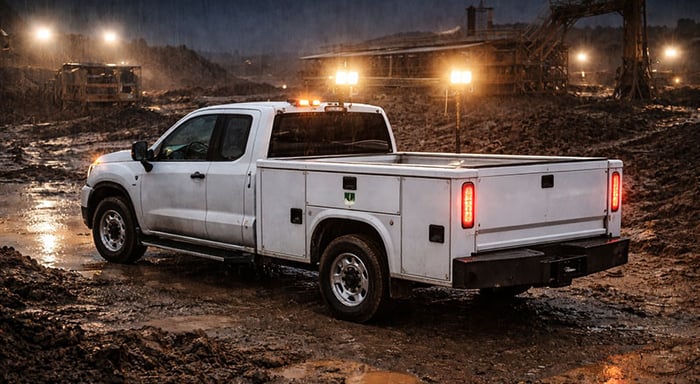 Service fleets operate in conditions that punish optimism. Jobsites change. Weather changes. Crews get dispatched to emergencies. And the work truck is heavy: tools, parts, jobsite lighting, sometimes welding, sometimes hydraulics – all take up space in the truck bed.
Even when the base vehicle is electrified, the job still demands energy at the point of use. That means auxiliary loads matter. If those loads reduce range or increase complexity, the fleet has not gained simplicity. It has gained more variables.
Why diesel and gas truck strategies are still beating EV right now
For industries such as construction and mobile tire repair, work trucks often face the challenges of long idle periods, sustained PTO or auxiliary power use, and unpredictable job lengths. These jobs can be punishing on batteries, lighting, and tool use drain energy faster than most electric vehicles can handle today.
Diesel and gas engines can deliver continuous power without degradation. Batteries deliver power, but sustained draw shortens usable range and introduces operator anxiety. Gas and diesel work trucks continue to dominate because they also refuel instantly, carry heavy payloads, and minimize operational risk.
Other considerations by fleet managers include the prioritizing of reduced downtime over fuel type. Diesel and gas platforms preserve payload for the things that generate actual revenue. Until EVs can absorb surprise the way diesel and gas do today, EVs will take a backseat as gas and diesel remain dominant throughout construction, mining, mobile tire repair, and other industries.
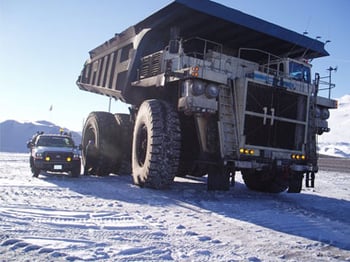 Electrification conversations often assume mild weather and predictable routes. However, North American fleets often operate in freezing temperatures.
Cold weather impacts range, charging times, and the practical reliability of systems that need to work before the first coffee. That doesn’t make electrification impossible, but it does make it more demanding. Fleets in cold climate regions tend to adopt technology only after it proves itself in wintery conditions.
Where Electrification Is Quietly Advancing: Auxiliary Systems
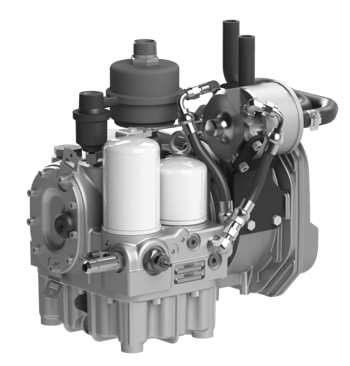 Even as adoption moves cautiously in service fleets, innovation inside electrified vehicle architectures is accelerating, especially around auxiliary equipment. Compressed air, lighting, and onboard power remain essential regardless of drivetrain. What changes is how those systems integrate into the vehicle.
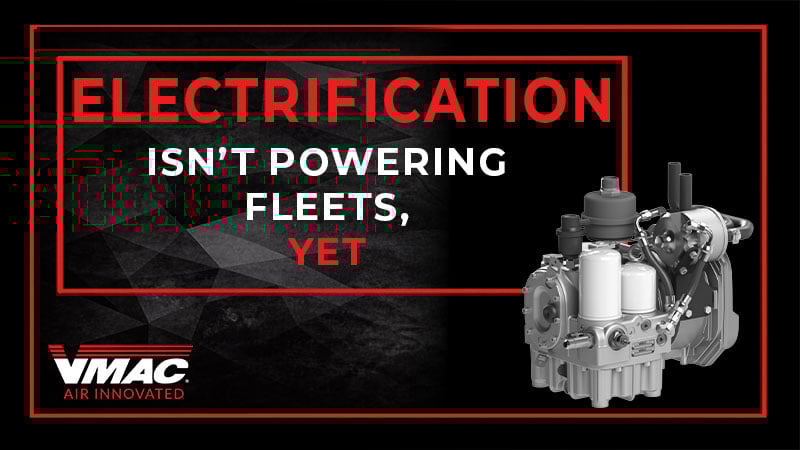
VMAC’s High Voltage Electric Vehicle development reflects this targeted evolution. One example is the VMAC HV20 high-voltage electric rotary screw air compressor. VMAC electric air brake compressors are application-engineered for electric, hybrid, and fuel cell vehicles including school buses, transit buses, class 8 tractor-trailers, and utility vehicles. Designed to operate directly from a vehicle’s high-voltage electrical system, the HV20 replaces a traditional reciprocating air brake compressor. The system emphasizes lightweight packaging, intelligent diagnostics, and quiet operation suited for urban environments.
Back to the Jobsite: Why Service Fleets Move at Their Own Pace
While electrified auxiliary technology advances, the daily reality of fleets remains complex. Construction and mobile repair trucks operate with changing routes, heavy payloads, and sustained tool usage. Continuous compressed air and power on the jobsite create energy demands that many electric platforms are still evolving to support efficiently.
The industry is not moving toward a single powertrain future. It is moving toward flexibility. Electrified auxiliary systems such as the HV20 show how innovation can evolve alongside battery electric and hybrid platforms, while diesel and gas powered fleets remain critical for operators working under unpredictable workloads.
Electrification doesn’t remove the need for compressed air and mobile power
Service fleets still need compressed air for tools, repairs, and field work. They still need auxiliary power for lights, welders, electronics, and hydraulics. If the vehicle architecture can’t supply these needs without compromising range and job completion, the fleet will continue to rely on proven onboard systems.
Where VMAC’s industry research fits
VMAC’s 2025 State of the Mobile Compressed Air Industry research is useful here because it frames electrification as fleets actually experience it: as one variable inside a broader set of operational priorities.
In VMAC’s 2025 report-related coverage, the company highlighted EV hesitation in mobile service fleets, emphasizing that electrification attention is not the same as adoption and that concerns include infrastructure, performance, and reliability (VMAC 2025 State of the Mobile Compressed Air report).
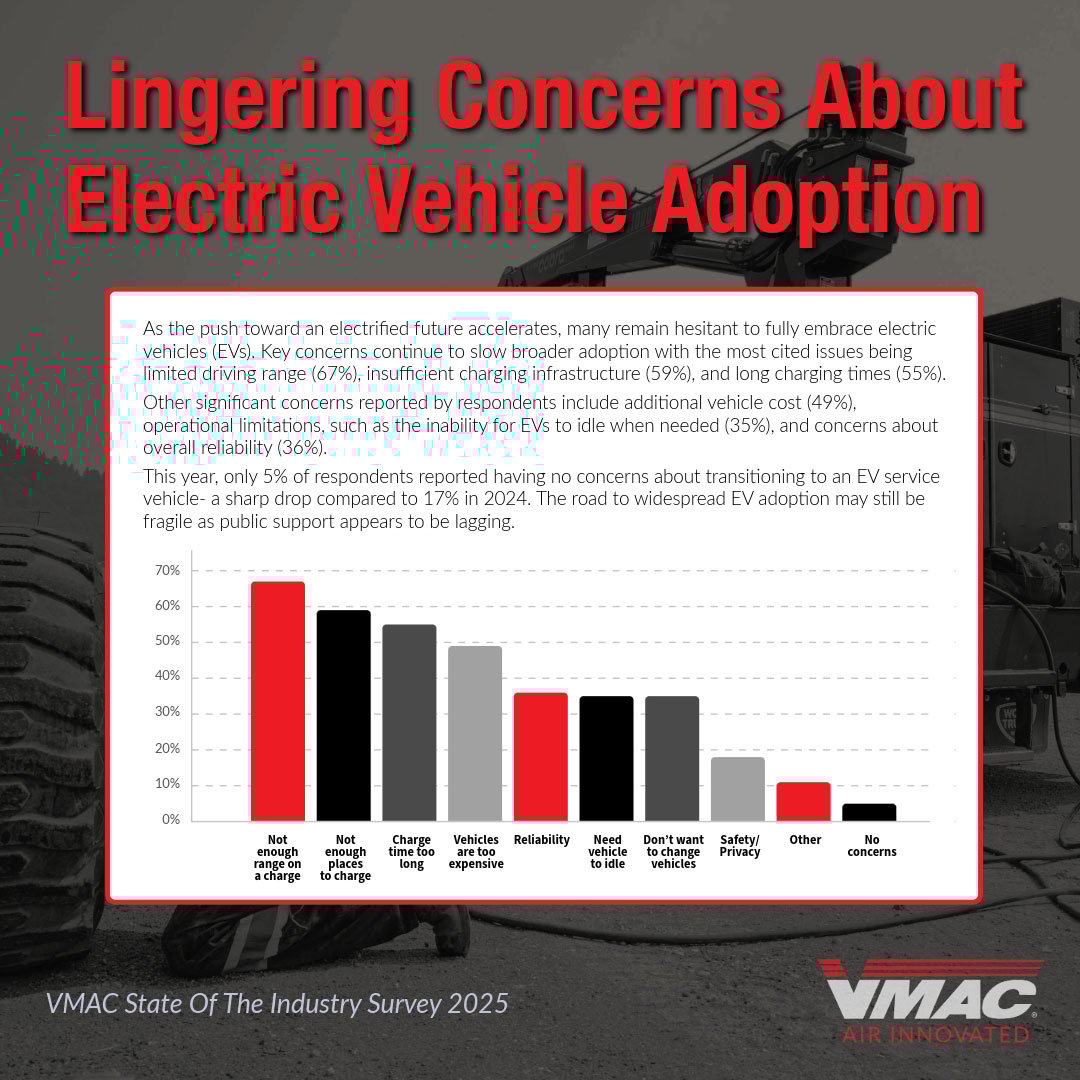
As the push toward an electrified future accelerates, many remain hesitant to fully embrace EVs. Key concerns in the 2025 report continue to slow broader adoption with the most cited issues being limited driving range (67%), insufficient charging infrastructure (59%), and long charging times (55%). Other significant concerns reported by respondents include additional vehicle cost (49%), operational limitations, such as the inability for EVs to idle when needed (35%), and concerns about overall reliability (36%).
Additional comments reveal a wide array of apprehensions, from political influences and performance in cold climates, to concern about vehicle quality and an overall skepticism towards EV technology. In 2025, only 5% of respondents reported having no concerns about transitioning to an EV service vehicle - a sharp drop compared to 17% in 2024.
Electrification will continue to grow, but the adoption curve is shaped by factors such as jobsite capability and the cost of disruption. Fleet managers will keep choosing what protects uptime.
VMAC continues to build on its transformative technologies
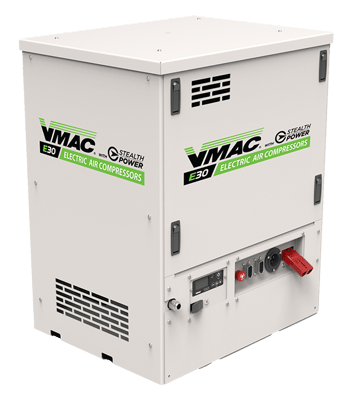 Looking ahead, VMAC continues to build toward the future without abandoning the realities fleets face today. Building on its history of unveiling transformative technologies, VMAC has also developed its new battery electric powered rotary screw air compressor, the VMAC E30 with Stealth Power.
Designed for fleets actively evaluating electrification where it makes operational sense, the E30 represents a measured, practical step forward. As the world’s most compact, lightweight, and intelligent battery electric powered 30 CFM rotary screw air compressor, the VMAC E30 reinforces VMAC’s philosophy: innovation should expand capability, not introduce risk.
It allows fleets to explore battery electric jobsite air power while maintaining the uptime, performance, and truck-first thinking that define successful service operations.
The bottom line: fleets will electrify, but on fleet terms
Electrification will keep moving. But fleets are right to insist that power must work on their terms.
Until charging access, cost, and duty-cycle are aligned, fleet managers will keep investing in what reliably converts fuel, electricity, and time into completed work.
