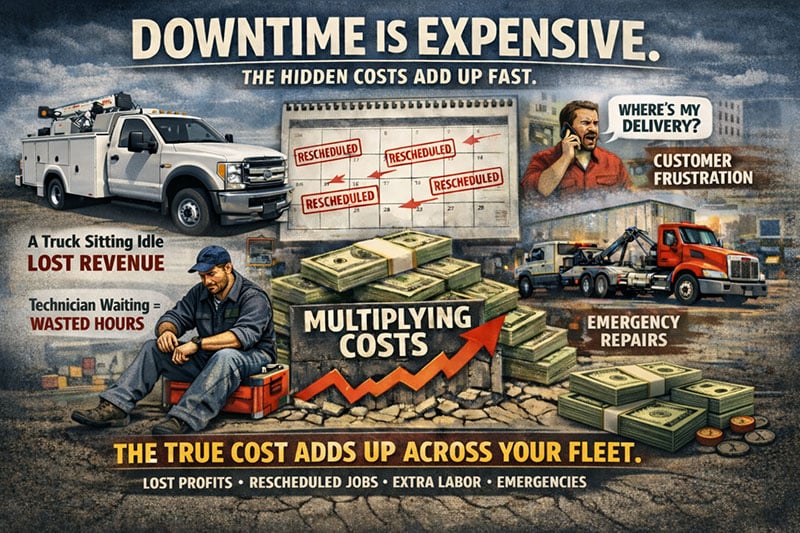
Downtime is expensive. Every fleet manager knows the obvious costs. A truck that isn’t moving isn’t generating revenue. A technician waiting on equipment isn’t fixing the problem. A delayed repair means another truck sitting idle somewhere else. But the real cost of downtime is often far larger than most operations realize. Lost technician hours. Rescheduled jobs. Overtime labor. Customer frustration. Emergency repairs that could have been prevented. Multiply that across dozens or hundreds of vehicles and the financial impact becomes staggering.
Across fleets, contractors, utilities, and municipalities, the industry is facing a reality that can no longer be ignored. Fleet productivity isn’t simply about installing the right tool on a truck. It is about how the entire system works together. That shift is changing how service trucks are designed, how equipment is integrated, and how fleets evaluate reliability.
This is why many industry leaders are reframing the productivity challenge. Fleet productivity is not a tool problem. It is an ecosystem problem. The fleets that understand this shift are redesigning trucks around integrated power, simplified systems, and uptime-first thinking.
Fleet Pressure is Rising Across The Industry
 The fleet industry is experiencing structural pressure from every direction. Vehicle prices are higher. Supply chains remain unpredictable. Maintenance costs are rising. Technology is evolving faster than most fleets can adopt it. Trade publications across the fleet sector are describing a market undergoing fundamental change.
“Costs were up, margins were tight, and every decision around vehicles, drivers, and maintenance was suddenly fair game.” — Work Truck Online, October 2025
Fleet operators are now under pressure to justify every purchase and maximize productivity from every asset. Instead of expanding fleets aggressively, many organizations are focusing on extracting more performance from the vehicles they already operate.
“Fleet leaders are choosing to maintain fleet size or expand slowly while focusing on maximizing asset utilization.” — Automotive Fleet, December 2025
Aging Vehicles Are Reshaping Fleet Decisions
 One of the biggest forces reshaping fleet strategy is the aging vehicle population. Trucks are staying in service longer as supply chains normalize and fleets wait longer to replace assets.
“Asset age and workflow inefficiencies are driving downtime across fleets.” — Fleet Equipment Magazine, January 2026
Older trucks typically require more maintenance, more electrical integration, and more technician oversight. Installing multiple standalone tools on aging vehicles increases the number of failure points across the truck.
Electrification is Starting to Change The Rules
Electrification is another force that is beginning to reshape the work truck industry. EV concerns remain a significant barrier - only about 5% of respondents are planning an EV fleet purchase soon, according to the 2025 Annual State Of The Mobile Compressed Air Industry Report. The report states:
“Key concerns continue to slow broader adoption with the most cited issues being limited driving range (67%), insufficient charging infrastructure (59%), and long charging times (55%).
Other significant concerns reported by respondents include additional vehicle cost (49%), operational limitations, such as the inability for EVs to idle when needed (35%), and concerns about overall reliability (36%).
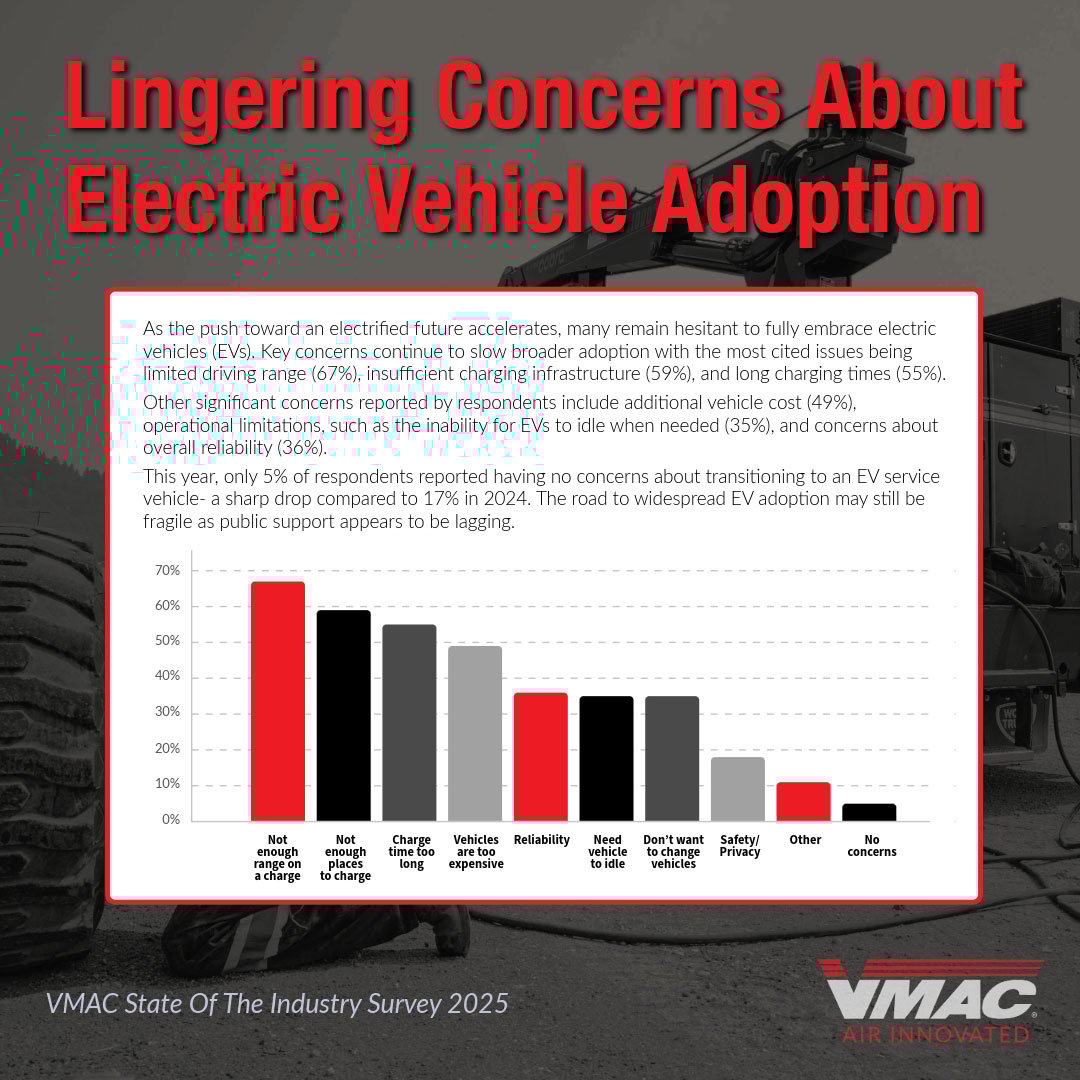
Additional comments reveal a wide array of apprehensions, from political influences and performance in cold climates, to concern about vehicle quality and an overall skepticism towards EV technology.”
– 2025 State of the Mobile Compressed Air Industry Report
“Fleet management is evolving with advancements in technology such as electrification, predictive maintenance, and telematics.” — Work Truck Magazine, November 2025
Electrification introduces new challenges because vehicle power must now be shared between propulsion, charging systems, auxiliary tools, and digital systems. Real-time telematics are important tools for an air compressor or multi-power system.
Fleet managers increasingly need to evaluate how compressors, generators, and power systems integrate into the vehicle’s energy ecosystem.
Technology Is Driving A Shift Toward Predictive Maintenance
Digital fleet technology is also changing how reliability is measured. Telematics, predictive maintenance systems, and data analytics are helping fleets identify problems before vehicles fail.
“The best option is to handle maintenance before things become problems. This keeps trucks on the road.” — Business Insider, February 2026
Predictive maintenance only works when systems are integrated. Independent tools that operate outside the vehicle platform are harder to monitor and maintain.
The Modern Work Truck Is a Mobile Power Platform
Today’s service trucks power a wide range of equipment. Air tools, welders, battery chargers, diagnostics equipment, lighting systems, and hydraulic tools all depend on reliable onboard power.
The traditional approach was simple. Install each system separately. A compressor. A generator. A welder.
But every additional tool increases weight, wiring complexity, maintenance requirements, and potential failure points. Eventually the truck becomes a patchwork of equipment.
VMAC Helped Define The Mobile Compressed Air Power Category
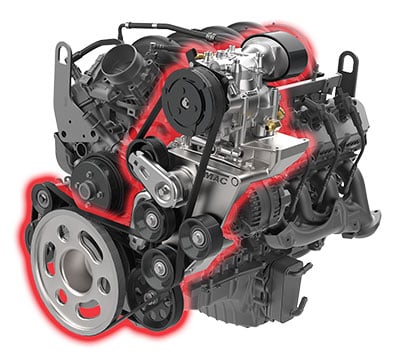 Many companies focus on individual tools. VMAC focused on something different. Since 1986, VMAC has helped pioneer integrated mobile power systems designed specifically for service trucks.
Instead of designing standalone equipment, VMAC engineered systems that integrate directly into the vehicle platform. The result is simplified truck architecture, improved reliability, and greater productivity in the field. Additionally, VMAC has focused on providing integrated advanced digital controls with telematics, safety controls, and other enhanced optional diagnostics that are important to operators, for improved predictive maintenance and usage.
My company has used VMAC air compressors in our mining vehicles for 25 years. VMAC is easily the most powerful, durable, and functional engine drive air compressor solution in the world.
- Alex Betar, Parts Manager, Classic Motors, Inc (Utah, United States)
UNDERHOOD® Air Compressors
The UNDERHOOD® systems designed by VMAC install directly within the engine compartment of the truck or commercial van. This integration frees up cargo space and reduces the need for separate compressor installations: https://www.vmacair.com/product/underhood-air-compressors
Benefits include improved space utilization, reduced system weight, and clear installation instructions for fleet upfitters.
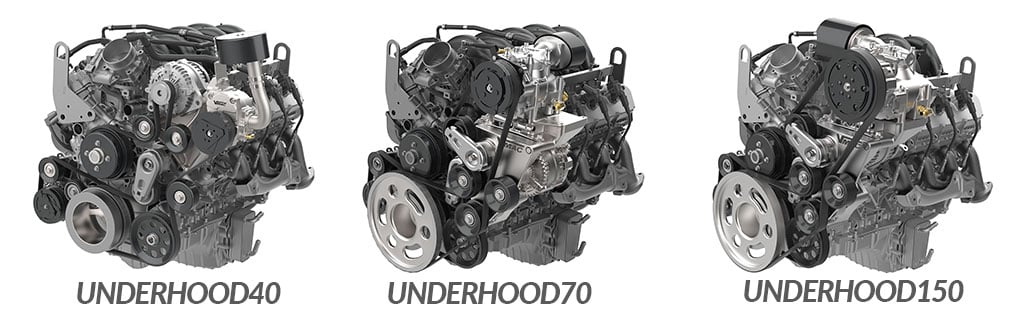
Now that the UNDERHOOD air compressor is with the truck, it is ready to use whenever there is a need for compressed air on the job site. There’s no lost time traveling back to the yard to get a compressor, and we don’t have to tow a trailer.
- Buzz Kirby, City of Livonia (Michigan, USA)
VMAC G90 Gas Driven Air Compressor
The brand new VMAC G90 with FlexDrive AMS represents a major step forward in adaptive compressed air technology. The system automatically adjusts airflow and pressure based on tool demand: https://www.vmacair.com/G90
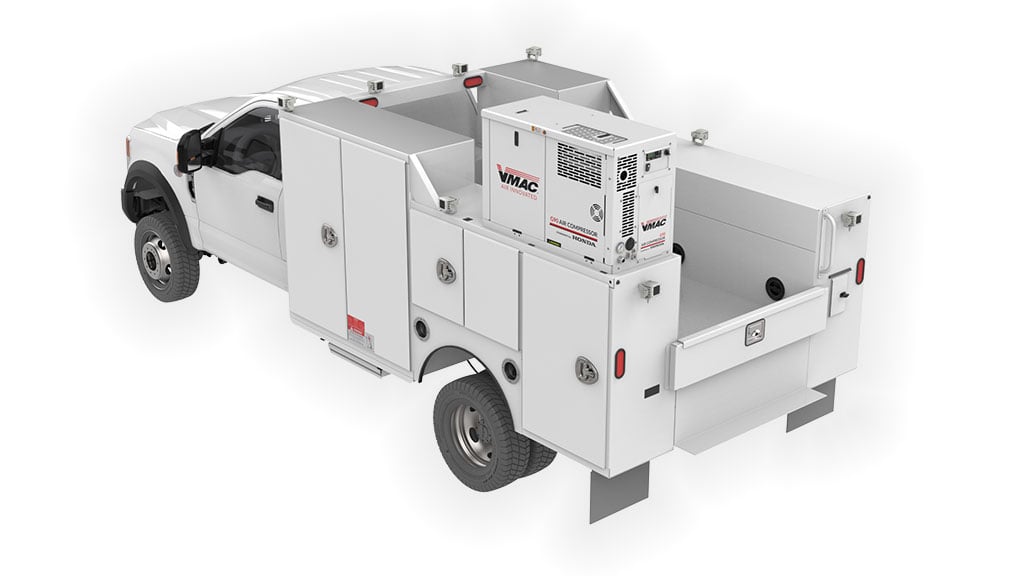
For technicians performing multiple operations such as tire inflation, bead seating, or running pneumatic tools, adaptive airflow improves productivity while reducing unnecessary engine load.
VMAC 6-In-1 Multifunction Power System
The VMAC 6-in-1 Multifunction Power System integrates several jobsite tools into a single platform.
Powered by a Cat® or Kubota Tier 4F diesel engine, or Honda EFI gas engine, VMAC’s Multifunction allows operators to turn off their truck engine and still have up to six types of power available in a lightweight and compact system.
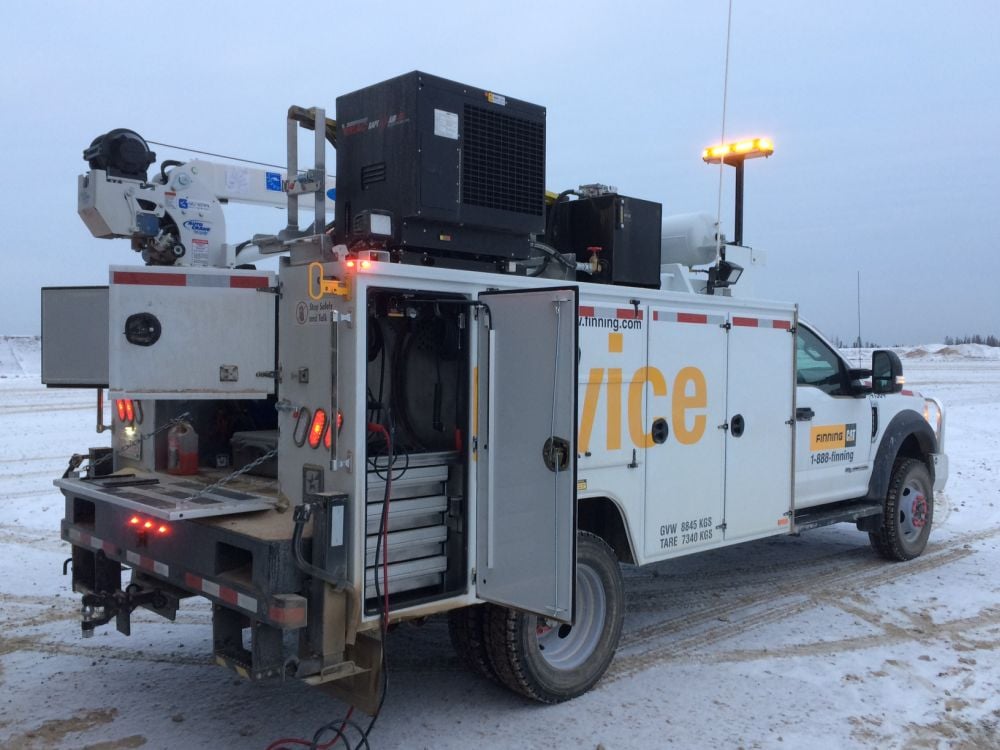 Available power options include a welder, generator, air compressor, battery booster/charger, and PTO port with hydraulic pump: Multifunction Power Systems
Instead of installing multiple standalone tools, fleets can deploy one integrated power platform.
I am impressed with the versatility of the VMAC Multifunction Power System. I can very quickly and easily go from using the on board air system to welding and air arcing. The unit has been great, reliable and easy to use. I would highly recommend one if someone was setting up a shop/service truck.
- Great West Equipment (British Columbia, Canada)
The Future of Fleet Productivity
Fleet productivity is increasingly determined by how systems interact across the vehicle ecosystem. Vehicle architecture, energy systems, mobile power equipment, digital monitoring tools, and technician workflows all influence uptime.
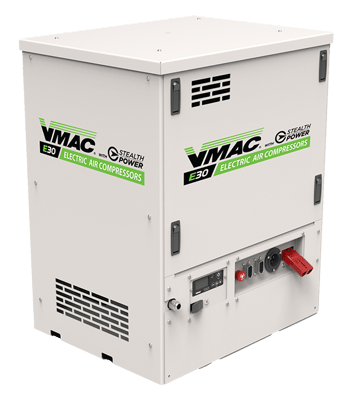 VMAC continues to meet the growing needs to ensure fleet productivity, including developing the e30 with Stealth Power. It is the world’s most compact and intelligent battery electric powered 30 CFM rotary screw air compressor. Designed for electrified and hybrid work truck platforms, the e30 will support fleets transitioning toward lower-emission power systems without compromising jobsite capability. vmacair.com/e30
As fleets transition toward electrification and data-driven maintenance, integrated mobile power systems will play a larger role in simplifying service truck design. Celebrating its 40th anniversary this year, VMAC continues to design and manufacture the most innovative mobile air compressors and multi-power systems available. Find the best air compressor or multi-power system for your application: https://www.vmacair.com
Today, in modern fleet operations, the most important question is no longer:
“What tool should we install on the truck?”
The real question is:
“How well does the entire system work together?”
