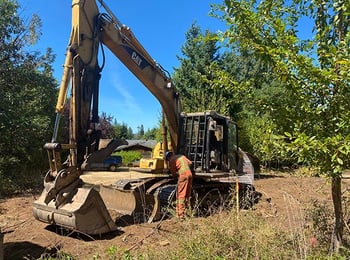
 For fleet managers, uptime has become one of the most important performance metrics in the modern service truck industry. Whether managing utility fleets, mobile mechanics, tire service trucks, municipal vehicles, construction service fleets, or equipment repair operations, the challenge remains the same: keep technicians productive, keep vehicles operational, and minimize unexpected downtime.
Recent industry discussions around Emergency Road Service (ERS) data, telematics, and predictive maintenance are changing how fleets approach vehicle reliability. Instead of simply reacting when equipment fails, many organizations are using operational data to identify patterns, predict service requirements, and improve asset utilization before problems affect productivity.
However, while vehicle diagnostics, engine data, and telematics systems receive significant attention, there is another critical piece of the uptime equation that is often overlooked - the auxiliary equipment mounted on the vehicle.
"Uptime has become a strategic differentiator, not a service add-on, as fleets increasingly measure value by productivity and reliability rather than vehicle specs... The competitive edge is moving beyond the truck itself to a full ecosystem of support, analytics, service networks and digital platforms that keep assets working." — ACT News
For many service trucks, compressed air systems are among the most heavily used pieces of equipment on the vehicle. If the air system fails, productivity often comes to a standstill. As fleet operators continue investing in data-driven maintenance programs, mobile compressed air systems are becoming an increasingly important part of the uptime conversation.
The Growing Importance of Uptime
 The cost of downtime continues to rise across North America. Technician shortages, increasing labour costs, longer equipment lead times, tariffs, inflationary pressure, and higher customer expectations have created an environment where every hour of lost productivity matters.
VMAC's 2025 State of the Mobile Compressed Air Industry research found that fleets are increasingly focused on maximizing productivity from existing assets while reducing unexpected maintenance events. This means fleet managers are asking several critical questions:
- Which vehicles experience the most downtime?
- Which assets generate the highest maintenance costs?
- Which equipment delivers the greatest productivity?
- How can maintenance be performed before failures occur?
- How can technicians complete more work with fewer interruptions?
These questions are driving investment in telematics, predictive analytics, and operational intelligence tools. However, fleet managers must also evaluate whether the equipment installed on the truck is helping or hurting uptime.
Looking Beyond the Chassis
Modern service vehicles have evolved far beyond transportation. Today's trucks often serve as mobile workshops capable of powering pneumatic tools, welders, generators, hydraulic systems, battery charging equipment, and diagnostic technology.
As fleets gather more operational data, many are discovering that auxiliary equipment failures can have the same impact as vehicle failures. A truck with a functioning engine but a failed air compressor may still be unable to perform its primary task.
This reality is pushing fleet managers to evaluate not only vehicle reliability but also the reliability of every critical system mounted on the truck. When compressed air powers impact guns, grinders, tire tools, jackhammers, pavement breakers, drills, and repair equipment, air system uptime becomes business uptime.
Why Air Compressor Reliability Matters
 Compressed air remains one of the most widely used power sources in mobile service applications. Construction crews depend on it. Mobile tire service technicians depend on it. Municipal maintenance departments depend on it. Utility fleets depend on it. Equipment repair professionals depend on it. When compressed air becomes unavailable, productivity often stops immediately.
This is why many fleets have shifted away from traditional reciprocating piston compressors and toward rotary screw compressor technology. Rotary screw systems provide continuous-duty performance, allowing operators to maintain airflow without mandatory cooldown periods. This helps eliminate work interruptions and supports consistent productivity throughout the day.
From an uptime perspective, uninterrupted airflow is not simply a convenience. It is an operational advantage.
What Fleet Data Is Revealing About Productivity
Modern fleet management platforms can track the following information:
- Engine idle time
- Fuel consumption
- Maintenance intervals
- Service history
- Asset utilization
- Technician productivity
- Vehicle location
- Repair frequency
 When fleets combine this information with operational observations, patterns begin to emerge. Many organizations discover that technicians spend significant amounts of time waiting for equipment. Waiting for air pressure recovery. Waiting for compressors to cool down. Waiting for portable equipment to be unloaded. Waiting for generators to start. Waiting for support vehicles to arrive. These delays often do not appear on traditional maintenance reports.
However, they significantly impact productivity. Fleet managers increasingly recognize that uptime is not simply keeping vehicles running. True uptime means keeping technicians working.
Compact Equipment Creates Operational Advantages
Another trend emerging from fleet data is the value of vehicle efficiency. Payload matters. Cargo space matters. Fuel economy matters. Vehicle weight matters. Modern service vehicles carry more equipment than ever before. As a result, fleets are seeking ways to reduce weight and free up storage capacity.
"Maximizing the utility of every square inch of cargo space is no longer just a convenience; it's a financial imperative. Reducing the curb weight of interior upfitting allows for greater payload density, meaning technicians can carry the specialized tools required for modern service calls without exceeding Gross Vehicle Weight Ratings." — Fleet Equipment Magazine
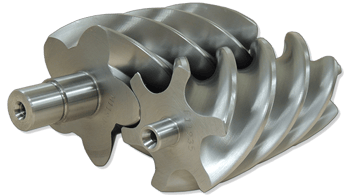 VMAC's rotary screw air compressor systems are designed specifically with these requirements in mind. Many systems are significantly lighter and more compact than traditional alternatives, allowing operators to carry additional tools, inventory, safety equipment, and replacement parts.
From a fleet management perspective, every pound saved can contribute to operational flexibility. The result is often a vehicle capable of handling a wider range of service calls without requiring additional support equipment.
Predictive Maintenance Extends Beyond the Truck
Predictive maintenance strategies have traditionally focused on vehicle systems that include engines, transmissions, brakes, cooling systems, and electrical systems. Today, many organizations are applying similar thinking to work truck equipment.
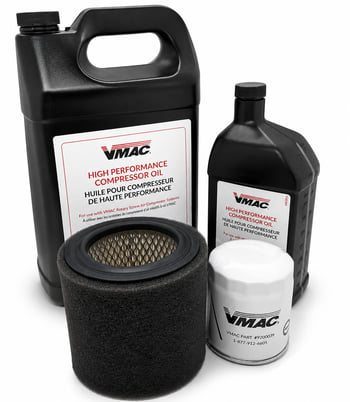 Instead of waiting for a compressor failure, fleet managers can monitor service intervals, operating hours, environmental conditions, and usage patterns. Rotary screw compressors are particularly well suited to planned maintenance programs because maintenance intervals are predictable and straightforward. Regular service typically involves oil changes, filter replacements, and scheduled inspections rather than extensive internal rebuilds.
"When it comes to rotary screw air compressors, it is important to follow the prescribed service and maintenance program... Commit to regular attention for items like oil changes, filter replacements, inspections, and system cleanings... this discipline minimizes risk and maximizes uptime." — U.S. Air Compressor Guide
This supports a proactive maintenance model rather than a reactive repair model. When equipment maintenance can be scheduled in advance, fleet disruption is minimized.
Reducing Idle Time and Fuel Consumption
Fuel costs continue to be a major concern for fleet operators.
Every unnecessary engine hour contributes to fuel expenses, maintenance costs, engine wear, and emissions output. This is one reason multifunction power systems are gaining popularity across North America. Instead of operating multiple independent machines, many fleets are moving toward integrated systems that combine compressed air, battery boosting, welding, power generation, and hydraulic capabilities within a single package.
VMAC's multifunction power systems are designed around this philosophy, enabling operators to perform multiple tasks while reducing vehicle idling and consolidating equipment. The VMAC Multifunction Power System is the best choice for customers who need a versatile multi-power machine that can handle any job.
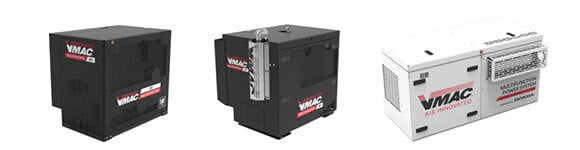 Powered by a Cat® or Kubota Tier 4F diesel engine, or Honda EFI gas engine, VMAC’s Multifunction allows you to turn off your truck engine and still have up to six types of power available in a lightweight and compact system. Power options include a welder, generator, air compressor, battery booster/charger, and PTO port with hydraulic pump. The 6-in-1 Multifunction with Honda engine is the only gas-powered multifunction system with built-in hydraulics – giving operators the freedom to do more in the field without hauling multiple machines.
As environmental reporting and sustainability targets become more important, these efficiency gains can also support broader company objectives.
The Role of Fleet Standardization
One of the most common lessons emerging from fleet analytics is the value of standardization.
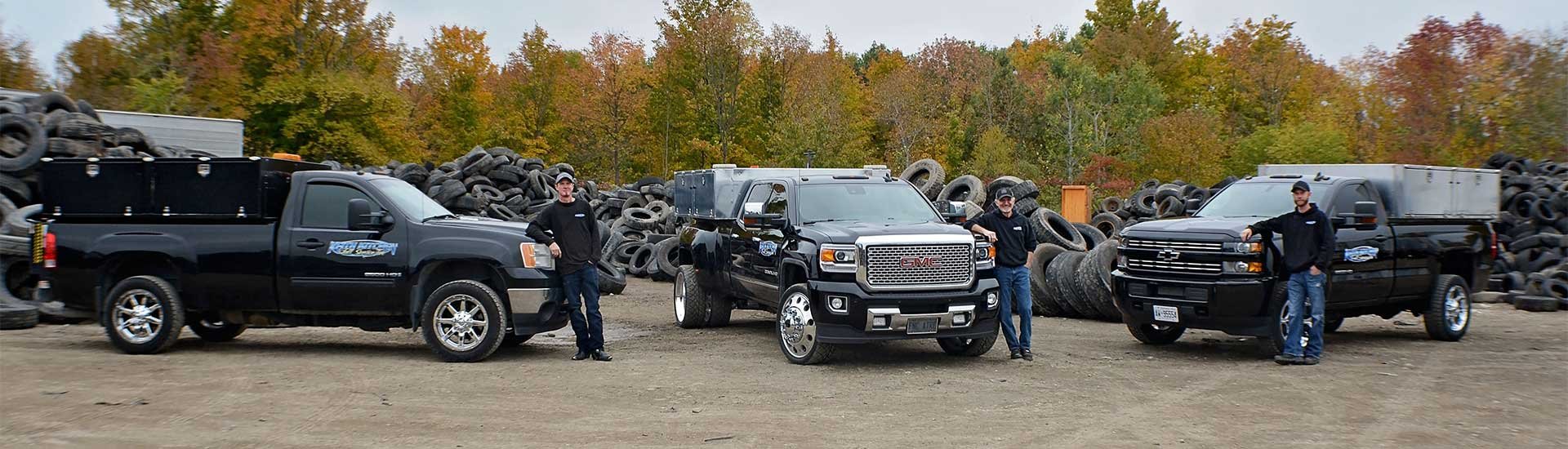
Fleets operating multiple compressor brands, configurations, and maintenance procedures often face challenges such as increased training requirements, higher parts inventories, longer repair times, and greater maintenance complexity and challenges.
Standardized equipment can simplify fleet operations and improve maintenance consistency. Many large organizations increasingly evaluate equipment based not only on acquisition cost but also on total cost of ownership.
"While a diverse fleet requires you to create separate maintenance schedules for each make of equipment you own, a standardized fleet allows you to create a more uniform preventive maintenance routine. Consistency in supplies reduces the diversity of necessary parts and tools, which can make it easier to get the supplies needed for specific repairs." — MacAllister Machinery
When maintenance schedules, service procedures, operator training, and replacement parts become easier to manage, overall fleet uptime often improves.
Uptime in Harsh Operating Environments
Many mobile professionals work in environments where downtime carries particularly high consequences.
Examples of where downtime becomes critical include:
- Mining operations
- Forestry applications
- Municipal emergency response
- Utility repair work
- Oil and gas service
- Construction projects
- Highway maintenance
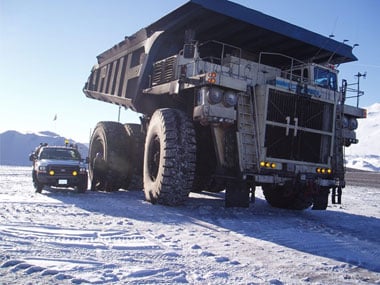 In these environments, equipment failures may occur hundreds of kilometres from a repair facility.
This reality places greater emphasis on reliability, durability, and field-proven performance.
VMAC systems are used across many of these demanding industries because they are designed specifically for mobile applications and continuous-duty operation. Fleets operating in remote and challenging conditions often prioritize equipment capable of delivering reliable performance under varying environmental conditions.
For these operators, uptime is not merely a productivity metric. It is often a requirement for completing the job.
The Future of Fleet Intelligence
The future of fleet management is becoming increasingly data driven. Artificial intelligence, predictive analytics, telematics platforms, and connected vehicle technologies are helping organizations make more informed decisions than ever before. Industry experts continue to highlight predictive maintenance and data-driven fleet operations as major areas of growth throughout the year.
"AI telematics is no longer a future trend. It's a present-day competitive advantage. By combining the raw power of telematics data with AI-driven insight and automation, today's fleets can reduce risk, cut costs, and improve performance at scale." — Motive
However, technology alone cannot eliminate downtime. Fleet managers still need equipment designed around reliability, maintainability, and operational efficiency. Data can identify a problem. Reliable equipment helps prevent the problem from occurring in the first place. This is where mobile compressed air systems play a critical role. The most advanced fleet management software cannot compensate for an air compressor that cannot keep up with demand or requires frequent repairs.
Reliable equipment remains the foundation upon which successful fleet management programs are built.
How VMAC Supports Fleet Uptime
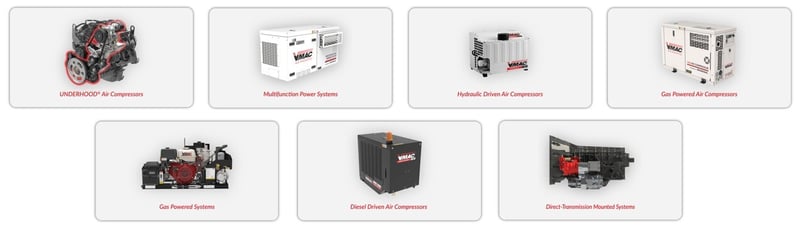
VMAC's approach to uptime extends beyond compressed air production. The company's product portfolio is designed around helping technicians remain productive throughout the workday.
Whether through:
- UNDERHOOD® air compressors that save cargo space.
- DTM systems that are the world’s only direct-transmission mounted PTO driven air compressor.
- Hydraulic driven compressors that are compact, powerful and lightweight hydraulic deck-mount air compressors that can operate in any climate.
- Gas-powered rotary screw systems that are the most affordable gas-powered rotary screw air compressors and air compressor/generators available.
- Diesel-driven compressors for operators who need the performance of a truck engine-driven air compressor, without running the truck.
- Multifunction power systems that consolidate up to 6 types of power into one package.
The goal remains the same. Reduce downtime. Increase productivity. Improve operational efficiency. Support technicians in the field. As fleet organizations continue embracing data-driven maintenance and operational intelligence, the role of reliable mobile equipment will only become more important.
 ERS reports, telematics platforms, predictive maintenance programs, and fleet analytics can provide valuable insights into vehicle performance. However, achieving true uptime requires evaluating every system that contributes to productivity.
For many service trucks, compressed air is one of the most important tools on the vehicle. When compressed air remains available, technicians can continue working. When technicians continue working, fleets improve utilization. When utilization improves, profitability follows.
In an industry increasingly defined by efficiency, reliability, and data-driven decision making, uptime is no longer simply about keeping trucks on the road. It is about ensuring every piece of equipment on the truck is ready to perform when the job demands it.
That is the future of fleet productivity, and it is a future where equipment intelligence and reliable mobile compressed air systems will continue working hand in hand.
