
Featured Expert
JP Chartier
JP Chartier is a Product Specialist at VMAC with over 20 years of experience and a strong technical support background.
Most customers approach air compressor selection the same way seasoned tradespeople have for decades. They start with the work, not the product. The tools being used, the duty cycle, the working environment, and the truck itself all come before the compressor. That mindset has stood the test of time for a reason. When you spec around working conditions instead of assumptions, performance improves, downtime drops, and total cost of ownership stays under control.
At VMAC, this application-first approach is not new. It is the foundation of how mobile air compressor systems are specified, engineered, and supported across every product category.
As VMAC Product Specialist JP Chartier explains, “The fastest way to end up with the wrong compressor is to pick a model before you understand the truck and the work it needs to do. When you start with the application and the vehicle, the right system usually becomes very clear.”
Why the Application Always Comes First
 Compressed air is not a one-size-fits-all utility. It is a working tool that behaves very differently depending on how it is used. A grinder, impact wrench, jackhammer, drill, or pneumatic pump may look similar on a tool list, but their real air demands can vary widely once duty cycle and simultaneous use are factored in. VMAC’s air tool consumption guide can provide a rough guideline.
Before any VMAC system is recommended, a proper application assessment answers a few critical questions:
- What air tools are being used on the truck?
- How many tools run at the same time?
- How long are those tools operating continuously?
- What CFM and PSI are required under real working conditions?
“Two customers can be running the same tool and still need completely different systems,” says Chartier. “How long the tool runs and how often matters more than what the tool is called.”
This application-first mindset helps prevent one of the most common issues in mobile compressed air: overspending on unnecessary capacity or incorrectly sizing a system that cannot keep up with the work.
“Every extra engine, trailer, and shaft you introduce is another thing that needs maintenance,” says Chartier. “Simpler, well-designed systems are easier to keep working.”
Understanding VMAC Product Categories Through the Truck and Application Lens
VMAC offers multiple mobile compressor categories because no single configuration fits every truck or application. Each category exists to solve a specific problem when applied correctly.
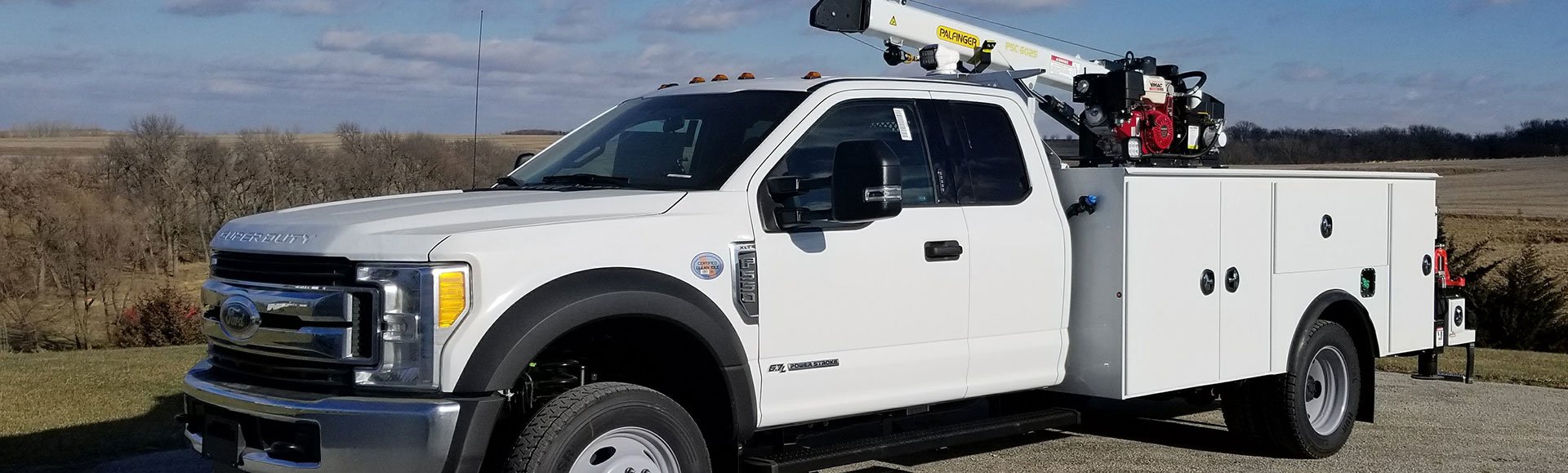
Available system types include engine-driven UNDERHOOD® systems, direct transmission mounted PTO driven systems, gas-driven stand-alone units, hydraulic drive air compressors, diesel-driven compressors, and multifunction power systems that combine air, hydraulics, and auxiliary AC/DC power.
 “There is no universal ‘best compressor,’” Chartier notes. “The best system is the one that fits the truck, the workload, and the customer’s long-term plan without compromise.”
Choosing the right category depends entirely on how the truck is built, how it is used, and how the customer plans to grow their operation.
Step One: Know the Truck Before You Spec the Compressor
The truck is not just a platform for the compressor. It is a defining factor in what is possible.
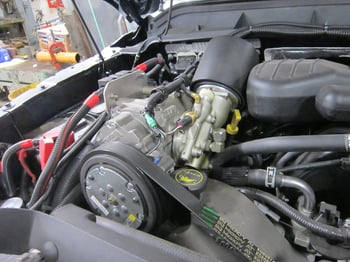
Year, make, model, engine type, fuel system, transmission, chassis size, and available mounting space all influence system selection. Whether the truck is an existing fleet unit or a new upfit also plays a major role.
Key considerations include whether the transmission supports a PTO, whether there is available space in the engine compartment, what electrical loads already exist, and whether hydraulics are installed or planned.
“I always start with the truck,” says Chartier. “If a system does not physically fit the vehicle or limits future upgrades, then it is not the right answer, no matter how good it looks on paper.”
This truck-first evaluation avoids costly retrofits and ensures the compressor integrates cleanly into the vehicle from day one.
Step Two: Define CFM Requirements Accurately
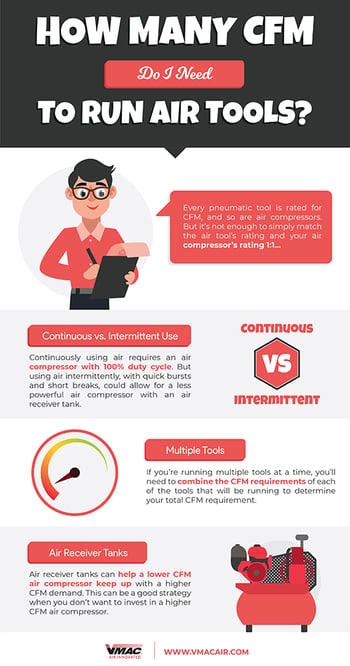 How many CFM do you need? Incorrect airflow estimation is one of the most common causes of poor compressor performance. Guessing CFM based on tool names or optimistic averages often leads to systems that either struggle because they are overloaded or operate inefficiently.
VMAC’s application process ties realistic CFM ranges directly to real tool consumption and duty cycles. Light maintenance work commonly falls in the 25 to 30 CFM range, medium-duty applications typically require 30 to 45 CFM, and heavy or simultaneous tool use can exceed 70 CFM.
“Intermittent use and continuous operation are not the same thing,” explains Chartier. “We spec for worst-case operating conditions, not best-case assumptions.”
This approach prevents underperformance in demanding conditions and avoids unnecessary fuel or power consumption from oversized systems.
Step Three: Consider Hydraulics, Power, and Future Needs
Modern service trucks increasingly support more than just air. Cranes, welders, pumps, and electrical tools often share the same vehicle platform.
Once airflow needs are defined, VMAC’s process evaluates whether hydraulic capabilities, auxiliary power, or multifunction systems are required, either immediately or down the road.
“A lot of customers know what they need today,” Chartier says, “but the smart ones think about what they will need in a few years. Planning for future power or hydraulics upfront usually saves money and downtime.”
Why Bigger Is Not Better
One of the most persistent myths in compressed air is that higher output automatically equals better performance. Tow-behind air compressor systems produce a massive amount of compressed air, and a perfect for remote jobsites that require large amounts of compressed air every day. Their disadvantage is their maintenance requirements for their diesel engine, taillights, and wheels. Some fleets will take one of these air compressors designed to be towed and mount it on a truck deck. This adds literally thousands of pounds to the truck’s GVW, so it is not an efficient use of available space or weight. VMAC’s rotary screw air compressors are built for continuous duty operation, and are designed for vehicle mounted applications, delivering steady airflow all day without pressure drops or constant cycling, while saving space and reducing weight, providing users with peace of mind.
“Most customers who switch from tow-behind to truck-mounted compressors say the same thing: they wish they had done it years earlier,” according to Chartier. Correct matching (right sizing) delivers lower operating costs, improved efficiency, and faster return on investment.
Conclusion: Expertise Is a Process - Not a Product
Proper compressor specification has not changed over time. Define the work. Understand the truck. Calculate airflow accurately. Plan for future requirements. Then select the system that meets those needs without excess.
VMAC’s value lies not only in the breadth of its product lineup, but in the disciplined, application first process used by Product Specialists like JP Chartier to ensure every system is built around how customers actually work.
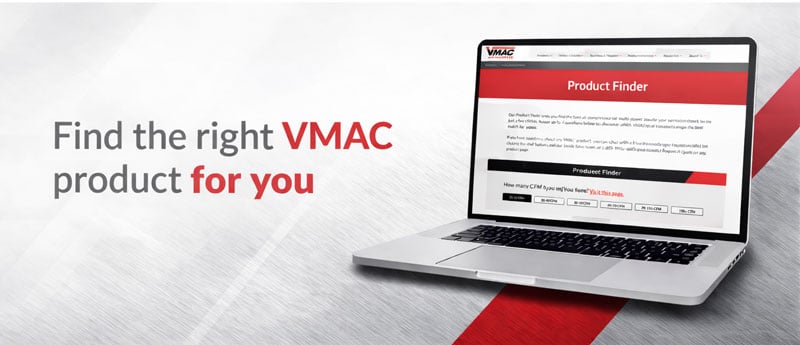
Matching the right compressor or accessory to the exact airflow needed helps avoid undersized equipment that struggles, oversized gear that wastes energy, and unnecessary downtime that costs everyone time and money. For clear, confident product selection based on your CFM needs, start with the VMAC Product Finder: https://www.vmacair.com/product/product-finder
“My goal is not to sell the biggest system,” Chartier concludes. “It is to make sure customers end up with the right system for their service truck, their job, and their future.”
