 Written by Mike Pettigrew, VMAC Marketing Manager
Summer remains the most demanding season for the service truck industry across North America. Construction schedules accelerate, utility and municipal projects stack up, and mobile tire repair and maintenance calls surge. In 2026, these seasonal pressures are amplified by broader market realities including global economic concerns, skilled labor shortages, cautious fleet investment, regulatory uncertainty, and rising expectations for productivity from every truck on the road.
Across the industry, fleets are responding by prioritizing reliability, equipment consolidation, and uptime. Nowhere is this shift more evident than in the way service trucks are being equipped for work in the field. Mobile compressed air and integrated power systems have become foundational, not optional, tools for summer operations.
Summer is peak season for service fleets. More jobs, tighter timelines, and fewer technicians mean every truck must perform without failure. A reliable service truck air compressor is essential.
At VMAC, product innovation is directly shaped by these conditions. By tracking industry trends, publishing independent research such as the State of the Industry Report on Mobile Compressed Air, and working closely with fleet operators and upfitters, VMAC continues to build mobile air and multifunction power systems designed for the realities of peak season work.
A Broader Look at the North American Service Truck Market
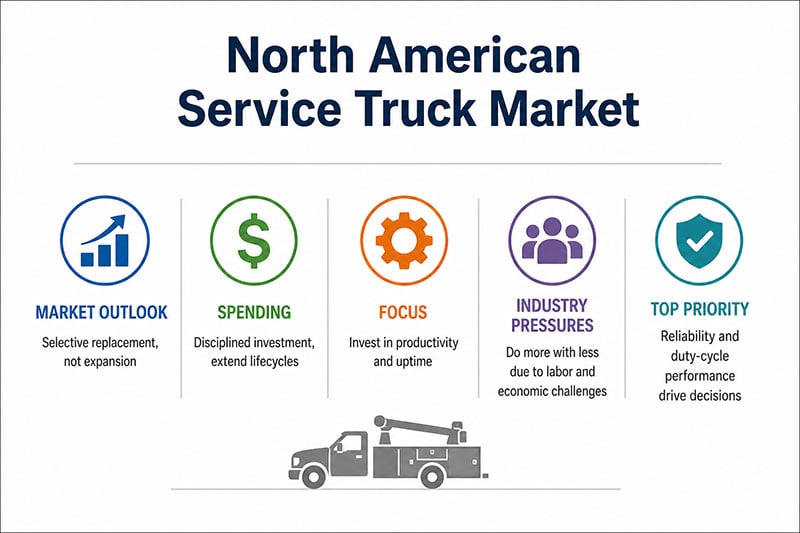
The service truck industry is entering the summer of 2026 with cautious optimism. According to ACT Research, 2026 is expected to be a year of “selective replacement rather than broad-based expansion.” Based on Service Truck Magazine market data, fleets are stabilizing after several years of volatility, but capital spending remains disciplined. Many fleet operators are extending vehicle lifecycles and focusing investment on equipment that improves productivity rather than fleet expansion.
Fleet Equipment Magazine reports that fleets are under increasing pressure to do more work with fewer assets. Economic concerns and skilled labor shortages persist across construction, utilities, oil and gas, and equipment repair, making uptime a primary performance indicator. According to Fleet Equipment magazine, “Reliability and duty‑cycle performance now outweigh nearly every other equipment consideration.”
As noted in March 2026 at Work Truck Week by Andrew Wrobel, Commercial Vehicle Insight Strategist at NTEA, ongoing economic uncertainty continues to suppress buyer confidence across the commercial vehicle market.
This environment favors solutions that reduce complexity, minimize failure points, and allow technicians to complete more work without returning to the shop. Service trucks are increasingly expected to function as complete, mobile workshops.
Equipment Consolidation Becomes a Defining Trend
One of the most consistent themes across industry coverage is equipment consolidation. Fleets are moving away from standalone machines and tow behind equipment in favor of integrated systems that maximize truck space and reduce overall weight.
NTEA industry analysis highlights that payload optimization is one of the top considerations in modern truck builds. Every pound saved allows crews to carry additional tools, parts, and consumables that directly support revenue generating work.
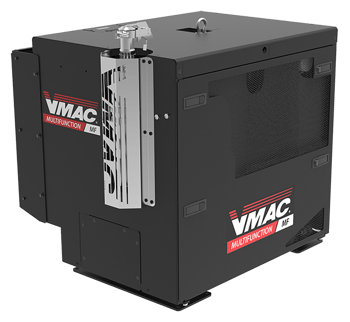 VMAC’s multifunction power systems support this trend by combining multiple jobsite functions into a single platform. Compressed air, electrical power generation, welding, battery charging, boosting, and hydraulics can all be delivered from one compact system. This reduces the number of engines, maintenance schedules, and fuel sources crews must manage during busy summer months. Learn more about VMAC multifunction power systems.
Summer Conditions Expose Equipment Weaknesses
High ambient temperatures and extended duty cycles make summer the most punishing operating environment for mobile equipment. Piston compressors and low duty cycle systems often struggle under sustained loads, leading to thermal shutdowns, inconsistent airflow, and premature wear.
VMAC’s State of the Mobile Compressed Air Industry Report has consistently shown over the past five years that rotary screw compressors remain the preferred technology for service trucks. Operators value their ability to deliver continuous airflow, maintain consistent pressure, and perform reliably in demanding conditions.
Systems such as UNDERHOOD® air compressors developed by VMAC can free up to 80 cubic feet on the truck deck or cargo area because the air compressor mounts in the engine compartment. UNDERHOOD air compressors can reduce truck GVW by as much as 1,900 lb. so operators can add more tools and equipment to your truck, carry more materials, and take advantage of better fuel economy. UNDERHOOD air compressors require less maintenance because stand-alone engine driven air compressors have their own engines that require servicing and repairs.
Gas driven air compressors, like the G30 and G30+GEN, are designed to maintain max CFM 100% of the time, maximizing air tool performance while providing maximum operator efficiency at the job site and eliminating downtime. This allows crews to run heavy pneumatic tools without relying on trailers or returning to the sh. Explore VMAC rotary screw air compressors.
 Data Driven Insight Shapes Fleet Decisions
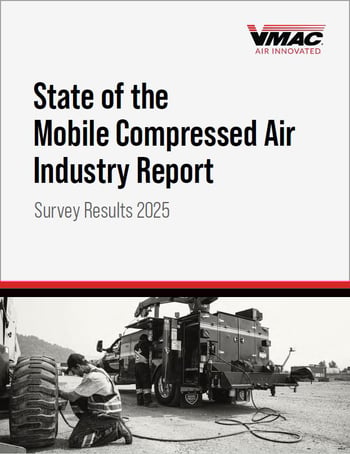
In an environment where downtime costs continue to rise, fleets increasingly expect clear data to support equipment decisions. VMAC has invested heavily in industry research to support this need through its annual State of the Mobile Compressed Air Industry Survey.
Now cited across multiple trade publications, the report provides a year over year snapshot of fleet composition, tool usage, compressor preferences, and emerging concerns. Recent findings show that air compressors remain the single most critical piece of equipment on service vehicles, reinforcing the importance of reliable mobile air during peak season.
VMAC President Tod Gilbert has noted that mobile compressed air remains the backbone of service vehicle productivity, a sentiment echoed throughout industry coverage.
Access the latest State of the Industry research: vmacair.com/survey
Intelligent Controls and Uptime Accountability
Another emerging trend shaping summer operations is the demand for smarter equipment. Fleets want systems that automatically adjust to workload, reduce operator input, and provide insight into performance and maintenance needs.
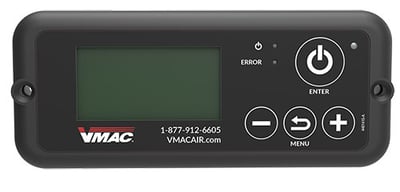 Most VMAC systems incorporate intelligent digital controls that monitor air demand and adjust compressor operation automatically to deliver only the air required for the task at hand. This improves efficiency, reduces fuel consumption, and limits unnecessary wear during long operating days.
Optional diagnostics and telematics capabilities are becoming foundational to how modern fleets approach uptime and maintenance, shifting the industry from reactive repairs to predictive, data-driven operations. As Ryder System, Inc. emphasizes, telematics enables fleets to “find and track potential issues before they materialize into serious problems,” supporting predictive maintenance strategies that extend asset life and reduce unplanned downtime. This aligns with broader 2026 fleet technology trends, where connected systems are no longer optional but central to operations.
According to FleetOwner, today’s fleet environment is increasingly complex, requiring operators to balance performance, efficiency, and evolving technology demands to stay competitive. Within this landscape, integrated equipment solutions like those offered by VMAC, including onboard diagnostics and telematics-ready systems, support fleet managers in executing proactive maintenance strategies that directly improve uptime, streamline workflows, and align with the industry’s ongoing shift toward fully connected, intelligent fleet ecosystems.
How Rotary Screw Technology is the New Standard for Fleet Uptime
Rotary screw air compressors continue to outperform traditional reciprocating systems in the demanding environment of modern service trucks, particularly during peak summer operations. Unlike piston compressors, which rely on intermittent duty cycles and are prone to heat buildup under sustained use, rotary screw technology delivers continuous airflow at consistent pressure, allowing operators to run high-demand pneumatic tools without interruption. This performance advantage directly supports uptime, which has become the defining metric for fleet productivity in 2026.
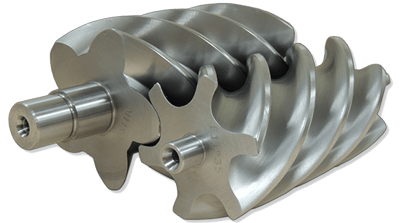 VMAC’s rotary screw systems are engineered specifically for mobile applications, incorporating precision-machined air ends, advanced cooling, and intelligent controls that maintain output even in high ambient temperatures. In addition to performance, VMAC backs its systems with industry-leading warranties and a reputation built on four decades of reliability in the field, giving fleet operators confidence that their equipment will perform when it matters most.
As fleets increasingly prioritize durability, reduced maintenance, and predictable operation, rotary screw compressors are not just a preferred option, they are becoming the standard for service truck efficiency and long-term value.
VMAC’s own blog section regularly explores these industry themes, connecting fleet trends to real world equipment decisions. Recent posts such as "Downtime Costs More Than You Think. Why Fleet Productivity Is Not a Tool Problem. It Is an Ecosystem Problem" examine how equipment choices impact the entire service workflow.
Another recent article, "Electrification Is Not Powering Fleets, Yet. Why Operators Are Driving a More Practical Conversation," reflects the measured approach fleets are taking toward new power technologies. Explore all VMAC blog insights: vmacair.com/blog
Why Summer 2026 Reinforces the VMAC Approach
Summer remains the industry’s proving ground. Equipment that performs reliably under heat, heavy workloads, and tight schedules earns long term trust. Systems that struggle quickly become barriers to productivity.
VMAC’s approach to product development is grounded in research, fleet operator feedback, and performance testing. Celebrating its 40th year, VMAC continues to provide power systems that help fleets work more efficiently during the busiest season of the year.
As North American service truck fleets plan for summer 2026 and beyond, the focus is clear. Fewer trucks are expected to deliver more work, with greater consistency and less downtime. VMAC air compressors and multifunction power systems are built to meet that challenge with power, reliability, and proven performance. Discover VMAC solutions for service trucks: vmacair.com